
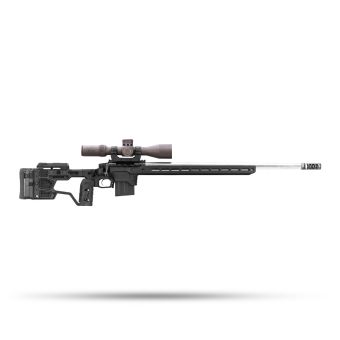

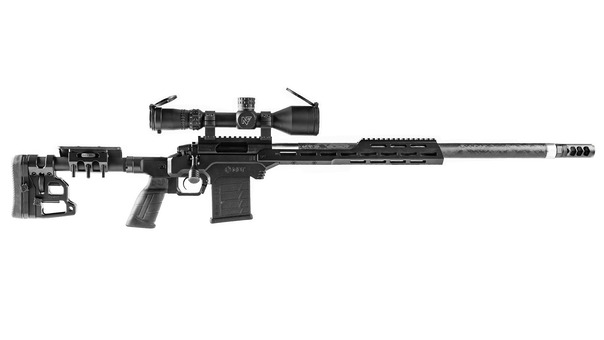

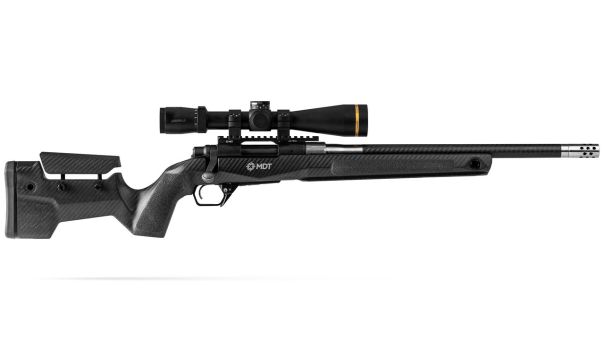
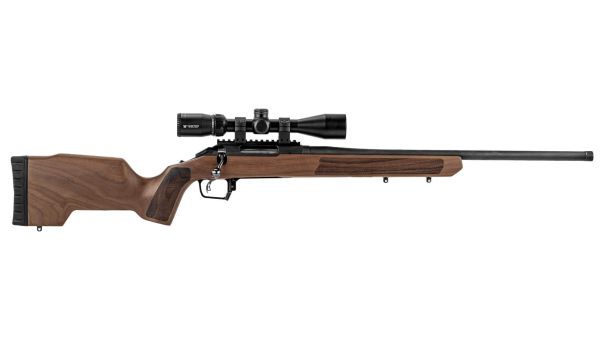
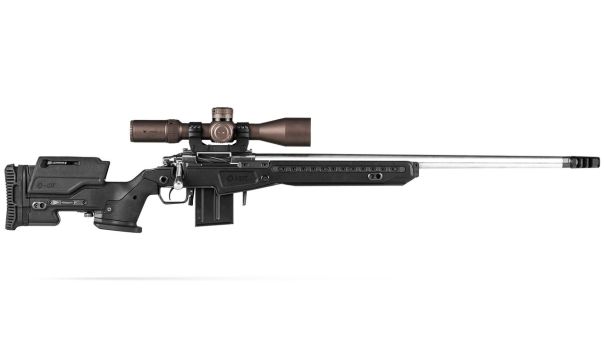


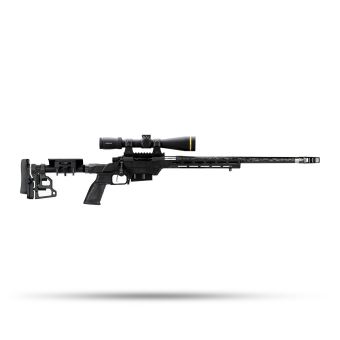








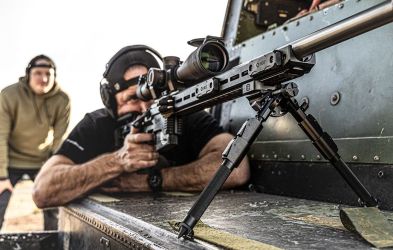
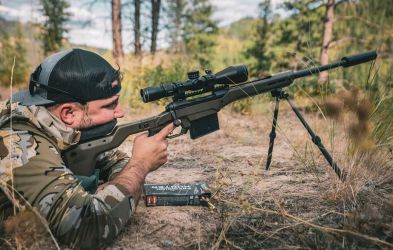
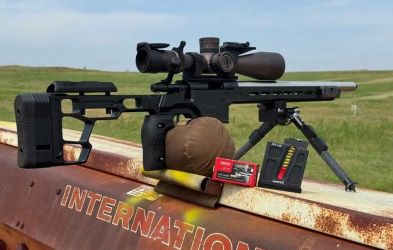
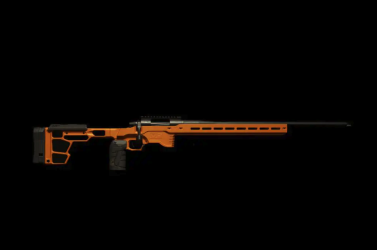

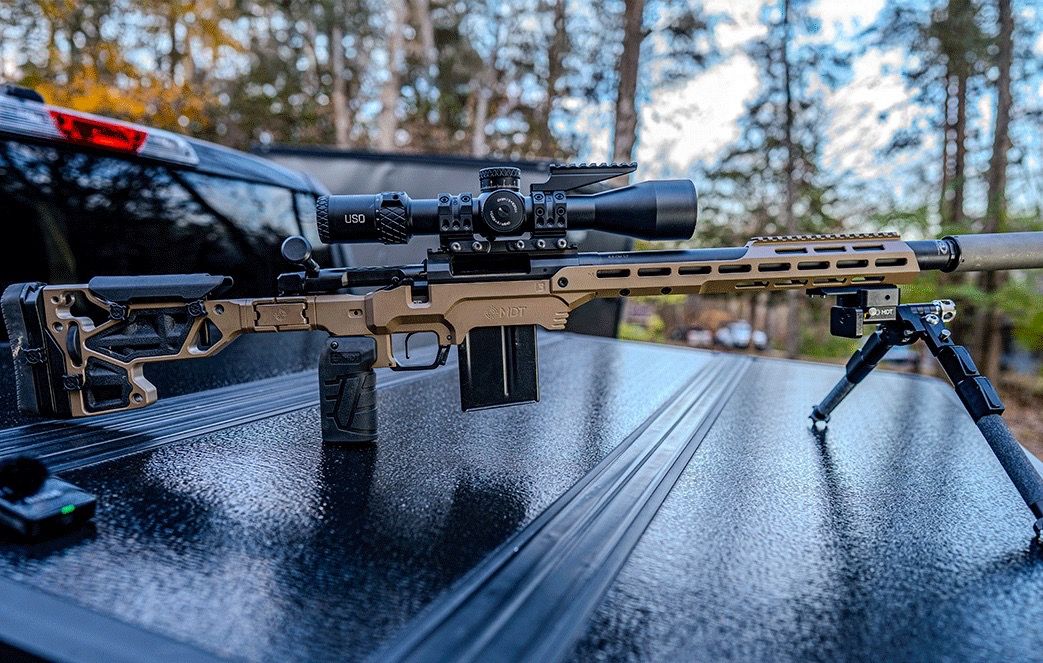

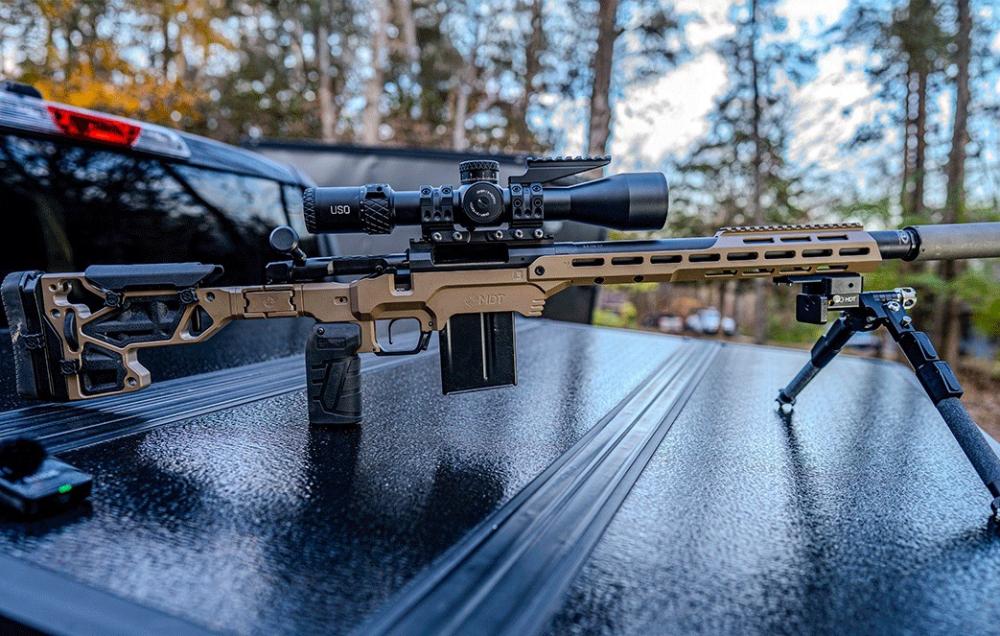
When I first discovered MDT, the ESS (Elite Sniper System) immediately caught my attention. I loved the design, but there was one problem: I didn’t want to be locked into the full-on tactical aesthetic. At the time, I was getting deeper into PRS-style precision shooting, and platforms like the ACC felt more aligned with where I was headed. That all changed when MDT released the LSS Gen3. The LSS Gen3 gave me exactly what I wanted—the visual appeal and capability of the ESS, without being married to a single system. Its modularity meant I could build a rifle that looked tactical, functioned as a precision platform, and could evolve over time. As soon as I heard about it, I knew I had to start a build.
The Foundation: LSS Gen3 Build 1.0
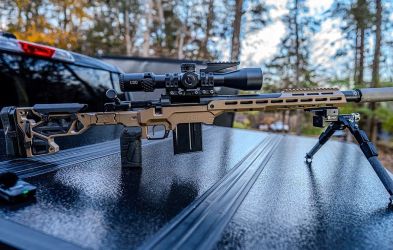
The goal for the first iteration was simple: an entry-level custom rifle with a tactical look, Picatinny rail up front, folding stock, and future flexibility. To start, I needed an action and a barrel. After shopping around, I landed on a Faxon FX-7 barreled action. For an entry-level custom action, it offers a lot: a six-lug bolt (two rows of three), an oversized bolt body, and a short bolt throw thanks to the three-lug design. It also accepts AICS and AW magazines. I found the barreled action on GunBroker for just over $1,000, a solid deal for what you’re getting. The FX-7 uses a Remington 700 short-action footprint, which made chassis selection easy. Using MDT’s online LSS Gen3 Configurator, I built out the rifle piece by piece:
Chassis: LSS Gen3 in FDE
Stock Interface: XTN
Buttstock: MDT SRS-XF skeletonized folding stock
Grip: MDT Vertical Elite Grip (my personal favorite for precision rifles)
Handguard: 13.7" Tactical handguard with front Picatinny rail
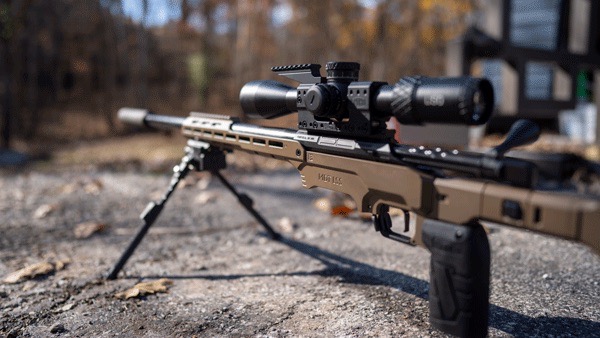
That front rail was intentional. I wanted the option to run night vision or thermal down the road. Once assembled, the rifle delivered exactly what I was after: ESS-inspired looks, excellent fit and finish, and the freedom to swap components as my needs changed. That’s the real strength of the LSS Gen3—you’re never locked into one configuration.
Optics, Trigger, and Suppression
The FX-7 was chambered in 6.5 Creedmoor with a 24-inch barrel. While not ideal long-term, it was a solid starting point. I installed a TriggerTech Special two-stage trigger, which felt perfect for a tactical-style build.
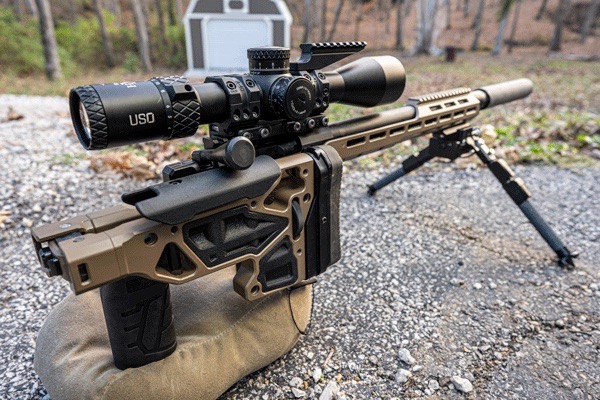
For glass, I already had a spare 34mm Spuhr mount, so I paired it with a US Optics TXH 3–18×50 FFP scope. The MCR Christmas-tree-style reticle felt familiar coming from competition optics, and at around $700, it was hard to beat. To finish things off, I added an Area 419 Hellfire Universal Adapter, a Hellfire suppressor mount, and a B&T Rotex titanium suppressor. The rifle shot well, looked great—but it was long. Very long.
The Evolution: MDT LSS Gen3 Build 2.0
The folding stock made it clear what this rifle should be: compact, handy, and easy to transport. With a 24-inch barrel and an 8-inch suppressor, that wasn’t happening. This rifle needed a shorter barrel. I reached out to Outlier Barrels, who spun up a 16-inch 6.5 Creedmoor barrel for me. The barrel featured a 1.2-inch straight contour, black nitride treatment, and Outlier’s shootout guarantee—much better suited for the role I had in mind. I ordered a Remington 700 Remage-style barrel with a barrel nut, knowing the threads matched the Faxon action. What I didn’t initially consider was the difference in bolt and barrel interface. Remington 700 barrels use a recessed bolt face as part of their “three rings of protection.” The Faxon FX-7’s three-lug (or six-lug, depending on how you count) design requires a flat barrel face. As delivered, the barrel wouldn’t headspace correctly, and the extractor wouldn’t engage the cartridge. Outlier Barrels came through in a big way. I explained the issue, sent the barrel back, and they machined off the recess to properly interface with the Faxon action. A short time later, the corrected barrel was back in my hands.
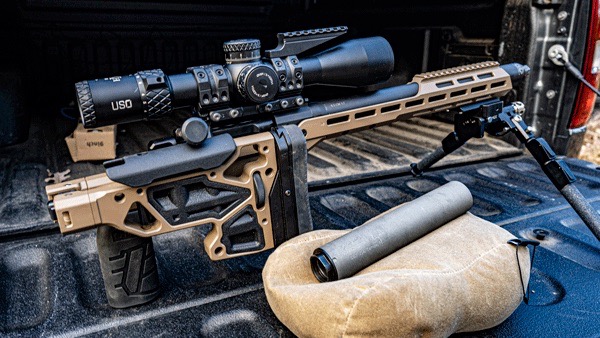
Swapping the Barrel at Home
To do a barrel swap yourself, you’ll need:
A barrel vise
An action wrench
Go/no-go gauges
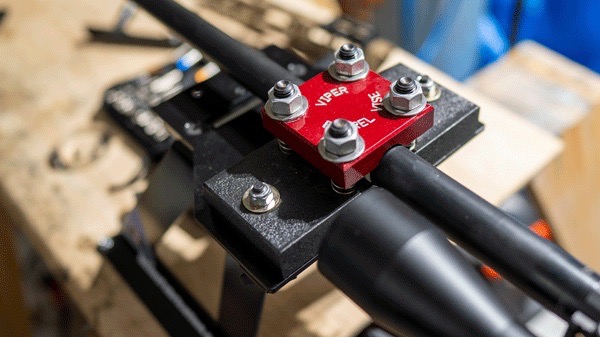
I use a barrel vise mounted to an Inline Fabrication base. The LSS Gen3 made disassembly easy—handguard off, two action screws removed, and the barreled action was free. After breaking the old barrel loose, I lubricated the threads on the new barrel, torqued it to 80 ft-lbs, and set headspace using Forster go/no-go gauges. Final headspace was set just 0.001" over minimum. Then it was time to reassemble and head to the range.
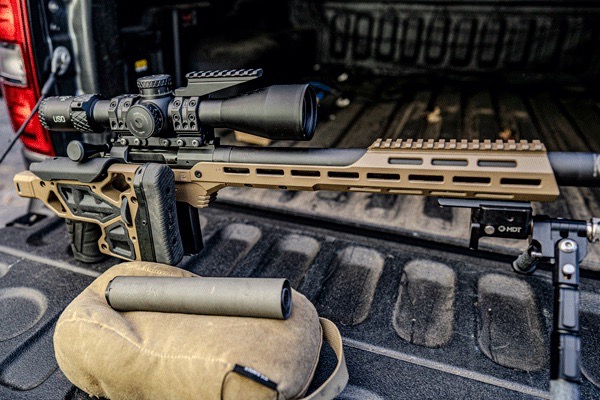
Final Results
The transformation was immediate. With the 16-inch barrel and suppressor, the rifle finally matched my original vision—compact, balanced, and extremely capable. Factory ammunition grouped consistently under ¾ MOA, and my handloads with 135-grain bullets pushed past 2,700 fps, which was incredibly satisfying. At this point, the rifle weighs 15 lb 14 oz, and it’s exactly what I wanted: a versatile, accurate, compact precision rifle that fits in a bag or the back of a truck and performs without compromise.
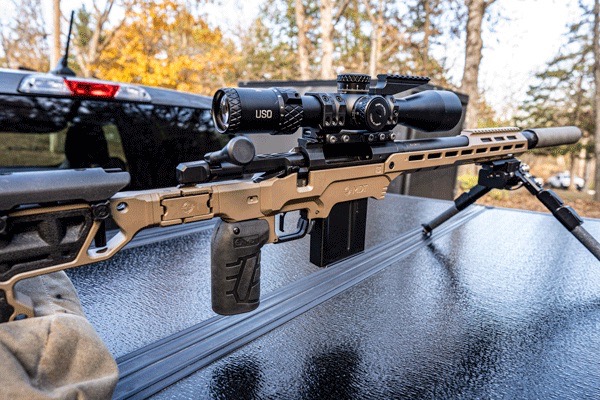
Final Thoughts
This build reinforced why I love modular rifle systems. The MDT LSS Gen3 isn’t just a chassis—it’s a foundation. You can adapt it for hunting, tactical use, or competition without specialized gunsmithing or replacing the entire rifle. For me, building a rifle isn’t just about assembling parts. It’s about problem-solving, learning, and creating something that truly fits your needs. The LSS Gen3 made that possible, and this project turned an idea into a rifle that feels like an extension of myself. If you’re on the fence about starting a similar build, my advice is simple: dive in, do your research, and don’t be afraid to ask for help. The results are worth it.
ABOUT THE AUTHOR
I have 20+ years in the automotive industry- first managing shops in the northwest for over 13 years, and now as a factory rep for Hunter Engineering. I love my family, my faith, and my firearms. I've competed in the PRS Southwest Region for 2 years. I also compete in long-range AR-15 competitions at least once a month and am an avid reloader. I have written for Ballistic Magazine's 'Ballistic Best' precision rifle edition for two years. My other hobbies include photography, videography, woodworking, and knife-making. You can find me on Instagram @davidinthesun