








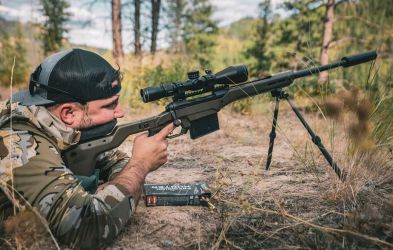
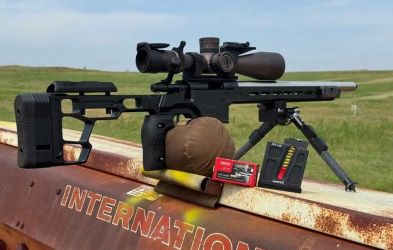
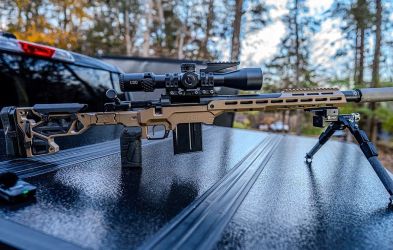

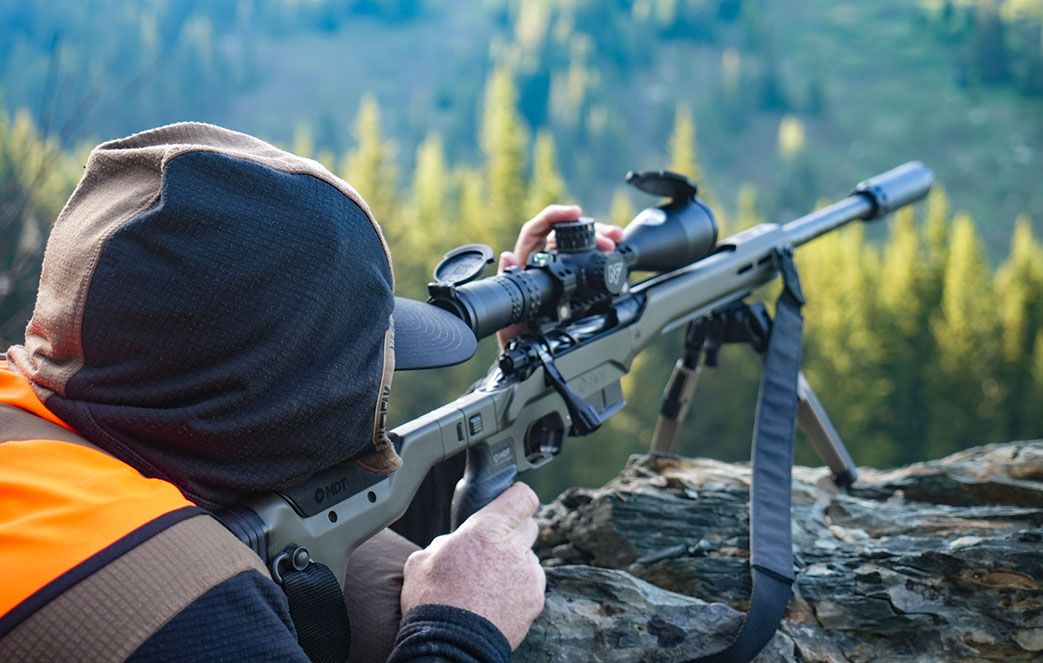

A lot of shooters will justify their scope by saying, “I can hit targets at 1,000 yards.” That’s like saying your shoes are amazing because they’ve walked 100 miles. Sure, they made the trip. But were your feet blistered? Did they hold up under load? Could you sprint in them if you needed to? That’s the same kind of incomplete thinking I see all the time when people slap a cheap optic onto an expensive rifle. There’s so much more to optics performance than just “it hits steel at distance.”
LET’S REDEFINE WHAT MAKES A SCOPE “GOOD”
It starts with the basics: can the optic reliably zero?
That means:
Precise turret clicks.
A consistent return to zero.
Floating the turret to reflect the actual zero without shifting the zero.
Locking turrets that don’t rotate in a case or backpack.
You’d be shocked at how many scopes fail this test during training. In every precision course I teach, we run a tracking test and a return-to-zero test. Many scopes on the line do not pass. That’s not me being picky, that’s reality. When you adjust for a known distance, you need to know your turret is moving exactly as much as you tell it to—and that it comes back perfectly when you're done. This is where “budget” scopes start racking up hidden costs. Because now, instead of gaining confidence, you’re second-guessing every shot.
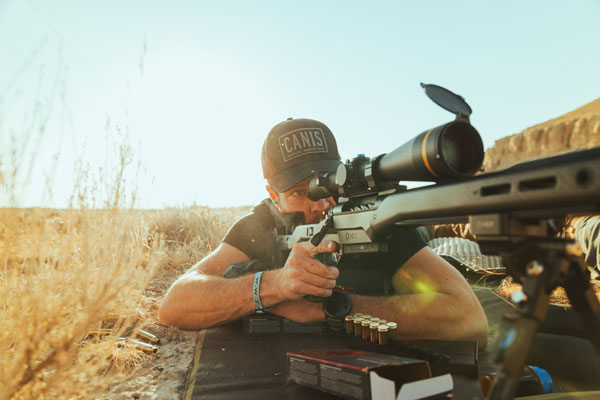
GLASS QUALITY MATTERS (MORE THAN YOU THINK)
On a sunny square range with white or orange steel at 1,000 yards, any decent scope will let you see the target. That’s not a test of quality.
Now try this:
Identify a camo-colored animal against a mixed background.
Make wind calls by observing fine movement in vegetation or mirage.
Or better yet, assess your hold while zoomed in on paper at 300 yards.
That’s when good glass separates from cheap glass. The ability to clearly read your target, understand feedback, and spot your own trace or splash, that’s performance.
MAGNIFICATION AND THE FALSE COMFORT OF “ZOOM”
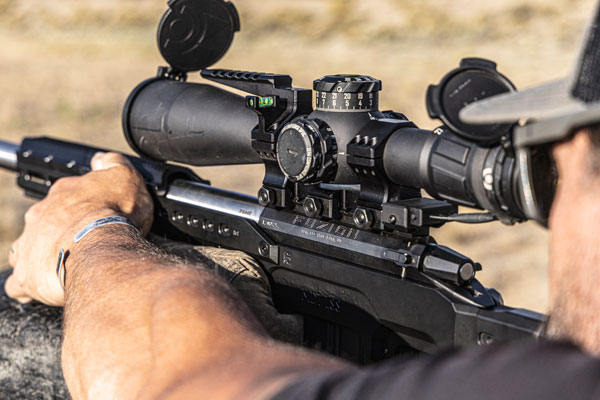
Some shooters fall into the trap of too little magnification because they’re used to high-contrast targets. Others over-magnify because they want to spot impact. Neither is optimal. There’s an ideal magnification for each role. Most serious users end up around 3-18x or 5- 25x, depending on the mission profile. Not 10-50x just because it “sounds good on paper.” And once you’re zoomed in, the eye box gets small. Budget scopes—and even some overpriced compact models—make this worse. A tight eye box means:
You lose the sight picture under recoil.
You struggle in unconventional positions.
You miss seeing your impact, or you miss, making corrections nearly impossible under pressure.
THE DOMINO EFFECT OF A BAD SCOPE
Here’s how it all breaks down in real life:
1 - You dial your scope for distance, but the turret doesn’t move the right amount.
2 - You shoot and miss—but your eye box is so small, you didn’t see where the shot went.
3 - You return your turret to zero, but now it’s off because it didn’t return perfectly.
4 - You spend the next 30 minutes trying to figure out what went wrong, setting up paper at 100 yards, and burning training time to re-zero your rifle.
5 - You’ve lost the morning—and your trust in your gear.
It happens all the time. I can’t tell you how many times I’ve had to walk a student through this on Day One of a precision course. They show up with a $2,500 rifle and a $399 optic because the guy at Cabela’s swore it was “good to a thousand.” It might be. But can it track? Can it return? Can it take a bump and hold? Will it hold zero after 10 days in the back of a truck?
Not likely.
FINAL THOUGHTS: BUY ONCE, CRY LESS
I understand budgets. I respect anyone investing in what they can. But don’t let marketing or range myths fool you. You don’t need to break the bank—but you do need to understand what makes a scope functional in the real world. Hitting steel is just one chapter of the book. Precision is about repeatability, durability, and confidence. And if you’re not confident, then the scope just costs you a whole lot more than you thought.